After outrunning the rain along the Darling River Run, it finally caught up with us.
In the heaviest downpour we’ve experienced since setting off, we crossed the Queensland border into Cunnamulla and pulled into the Warrego Riverside Park, hunkering down until the skies cleared and the roads reopened to Charlotte Plains.

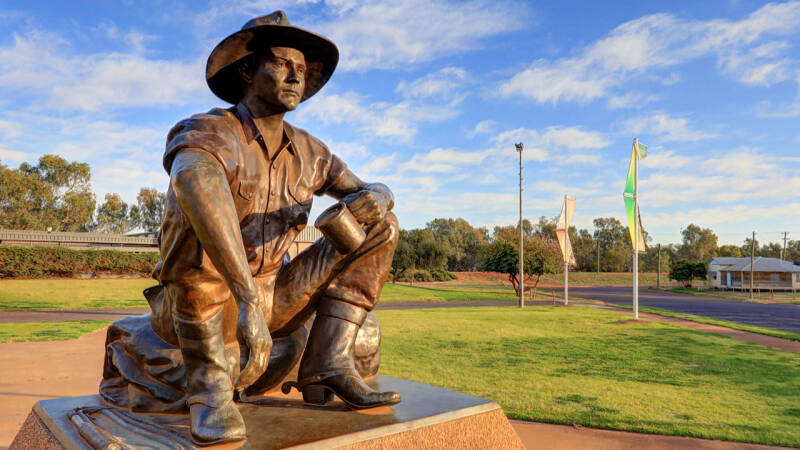
During our short stay in this iconic outback hub, we visited the legendary Cunnamulla Fella—a tribute to the Aussie stockmen who shaped this country. Immortalised by Slim Dusty through Stan Coster’s lyrics, the statue stands as a proud reminder of the region’s heritage.
With word that the roads were passable again, we set off for Charlotte Plains Station. Sprawled across 27,000 hectares, this working sheep and cattle property has been in the Nagel family since 1923 and is now run by Robyn Russell. Today, it blends pastoral life with a welcoming outback farm stay.
We camped at the Bore Campground, lucky enough to nab a spot right beside the bore-fed creek. Days were spent soaking in the station’s famous artesian baths—naturally heated to a steady 42 degrees—and one early morning we made the 10km drive out to a private bath, watching the sunrise in complete stillness. It was nothing short of magic.
Evenings brought everyone together around the campfire, with a relaxed, social atmosphere and an open bar adding to the experience. We also explored parts of the station by bike, riding quiet tracks through varied landscapes, spotting cattle and even catching sight of three brolgas gliding overhead.
Feeling refreshed, we moved on to Nindigully after a local recommendation—and it didn’t disappoint. With a population of around nine, this tiny outpost is home to the historic Nindigully Pub, perched on the banks of the Moonie River. Established in 1864, it’s one of Queensland’s longest continually licensed pubs. We camped by the river and wandered across for a hearty meal and a well-earned drink.
From there, we continued on to Surat for a quick overnight stop. Once a bustling Cobb & Co changeover point, the town still holds echoes of its past, with the original site marking where coaches once delivered travellers and goods across the outback.
An early start the next morning had us on the road to Roma, determined to make it in time for Tuesday’s cattle sales at the Roma Saleyards—and it was worth every bit of the effort.
We began with a self-guided walk through the interactive centre, which brings the Australian cattle industry to life, before joining a tour led by retired locals whose knowledge runs deep. From the gantries, we looked out over thousands of cattle—around 8,000 head—sorted into lots and ready for auction.
The sale itself was fast-paced and fascinating, with strong prices reflecting a great season of abundant feed and prime stock. One of the standout moments was seeing how calmly and respectfully the cattle were handled, with many skilled women leading the process.
It’s an experience we’d highly recommend to anyone passing through Roma.
We also took time to visit the Big Rig, diving into the story of Australia’s oil and gas industry. Exploring the Oil Patch Museum, we stepped back in time among vintage machinery before climbing the 40-metre Big Rig Tower for sweeping views over the historic rig and the town beyond.
From rain-soaked roads to artesian soaks, riverside pubs to the pulse of the cattle yards—this stretch of the journey delivered a true taste of outback Queensland.
Add comment
Comments