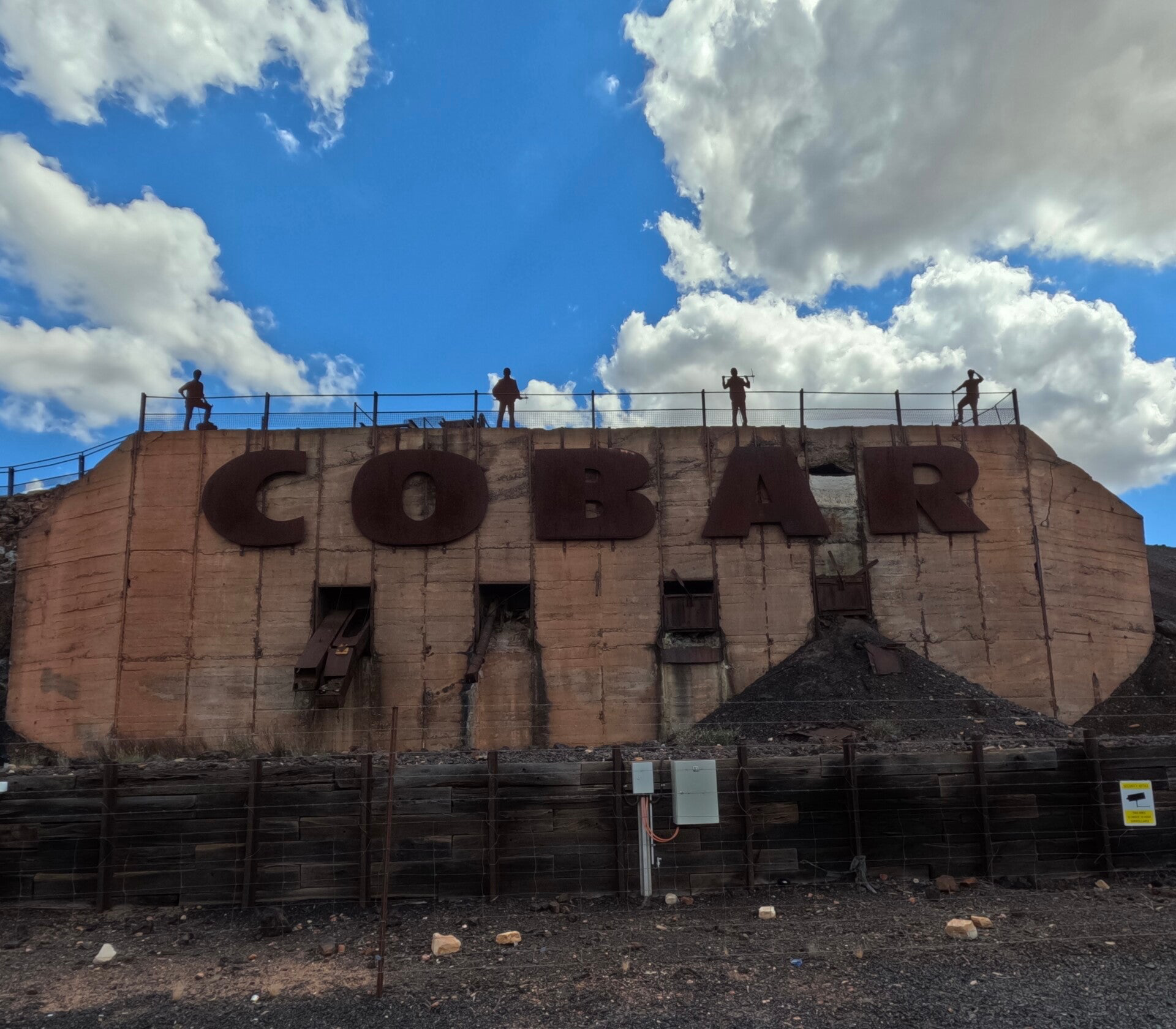
Cobar Shire is located in western New South Wales, about 700 kilometres north-west of Sydney and 650 kilometres north of Canberra. The town sits at the crossroads of three major highways – the Kidman Way linking Melbourne to Brisbane, the Barrier Highway connecting Sydney to Adelaide via Broken Hill, and the Wool Track linking the Sunraysia region to Queensland.
Unshackled Adventures had heard mixed reviews about Cobar, so we were keen to experience it for ourselves.
Cobar is very much a mining town – with everything that implies. Peak Mining operates two underground mines in the area, Peak South and New Cobar, along with a base metals and gold processing plant. A third major operation nearby is the CSA Copper Mine, operated by Metals Acquisition Corporation.
Being beyond the “limit of agriculture,” the surrounding countryside isn’t lush farmland. Instead, the landscape is classic outback – scrubby bushland scattered across shimmering red dirt. And really, who doesn’t love that unmistakable glow of red earth against the hardy outback vegetation?
There are many sights of cultural and historical interest in and around Cobar. We followed the town’s Heritage Walk, which provided a fascinating insight into the early development of the settlement and its deep connection to mining. Much of Cobar’s colonial 19th-century architecture remains, making it well worth a wander through town.
One of the most moving sites we visited was the Miners Memorial. The memorial commemorates those who have lost their lives in the local mines. At its centre is an underground chamber designed to resemble a mine entrance, drawing visitors inward as they enter the park. The walls are lined with stories and historical accounts of the incredibly tough conditions miners once faced.
The miners themselves are remembered on a symbolic tag board made up of brass plaques. It’s a poignant place to pause – a reminder that these miners never “tagged off” at the end of their shift. On the anniversary of each miner’s death, museum staff place an everlasting daisy on their tag, which remains there for the month in their memory.
The Tourist Information Centre is also well worth a visit, housing an impressive collection of artefacts that reveal the diverse heritage of the Cobar district. The exhibits tell the story of the town’s pioneers and highlight the strong culture of resilience and “making do” that shaped life here.
Another highlight was Fort Bourke Hill Lookout. Normally accessible by car, the lookout was temporarily closed during our visit due to works. However, a complimentary bus tour was running, and with a driver who had spent many years working in the mine, it proved to be incredibly informative. From the lookout you can see the vast open cut that forms the entrance to a huge network of underground tunnels. This operation, run by Peak Mining, produces gold which is processed at the nearby plant – where they even pour the gold bullion.
For caravanners, there are several camping options in Cobar, including the caravan park, donation camps, and a new free overnight site directly opposite the Visitor Information Centre. We also took a short drive out along the Barrier Highway to Glenhope Bush Camp on Glenhope Station. This offers dispersed bush camping among the red dirt for just $10 per night. With soaring temperatures during our visit, we decided to give camping there a miss this time, but we did explore a replica of the original homestead while we were there.
Overall, we found Cobar to be a fascinating place with a rich mining history. It might divide opinion, but for us it was definitely worth the visit.
** Tip: For the best viewing experience, click the YouTube link in the bottom left corner of the video to watch in higher clarity.
Add comment
Comments